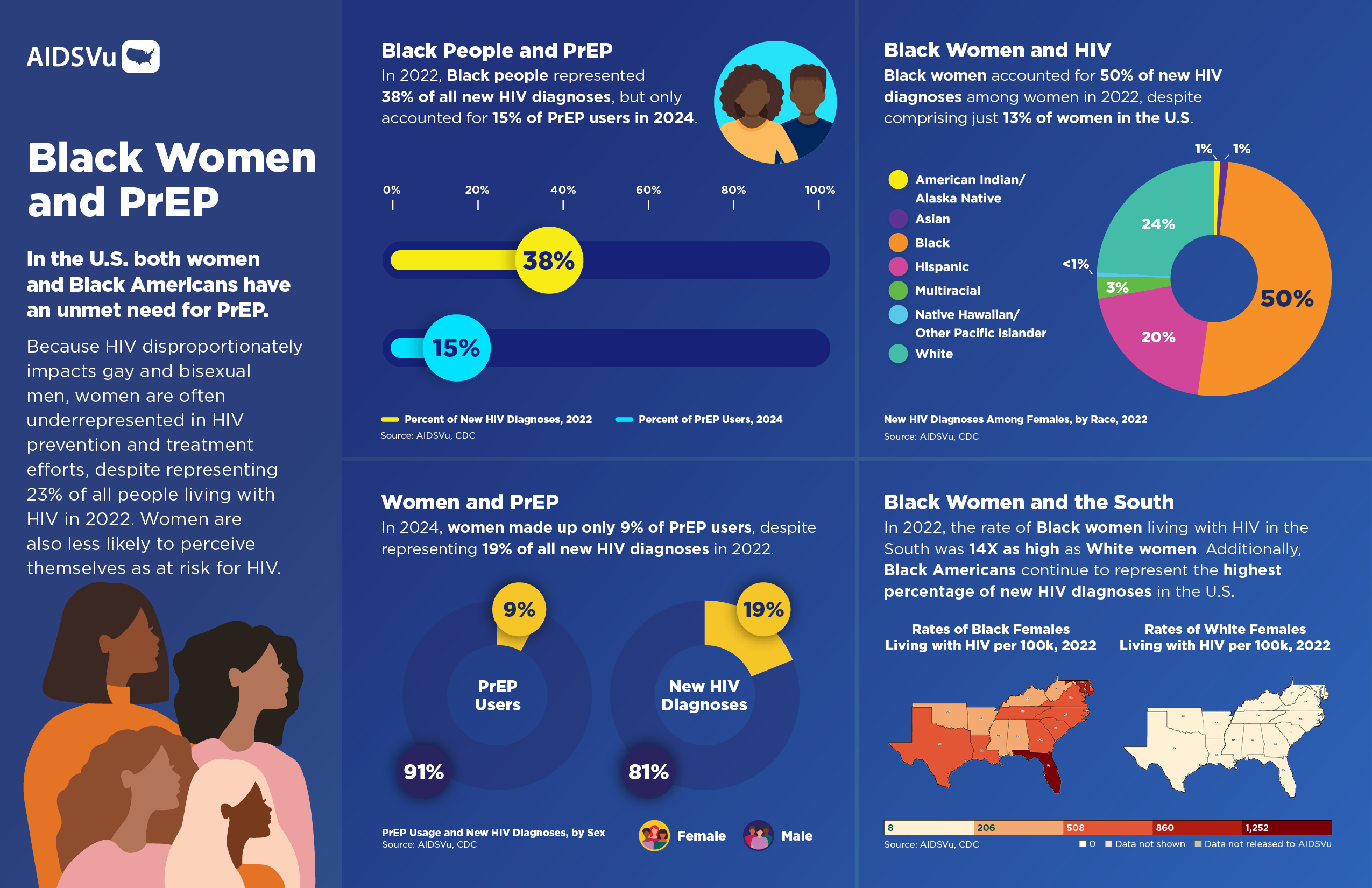
Because HIV disproportionately impacts gay and bisexual men, women with HIV are often underrepresented in the HIV conversation, despite being meaningfully impacted by HIV. Women are also less likely to perceive themselves as at risk for HIV and may not receive HIV prevention information from health care providers or their communities that reflects their level of risk.
Among all PrEP users in the U.S. in 2025, 90% were men and only 10% were women, even though women accounted for 20% of new HIV diagnoses in 2024.
These disparities are also reflected in PrEP equity. Men had a PrEP use rate nine times higher than women and a PrEP-to-Need Ratio more than twice as high, demonstrating greater unmet need for PrEP among women.
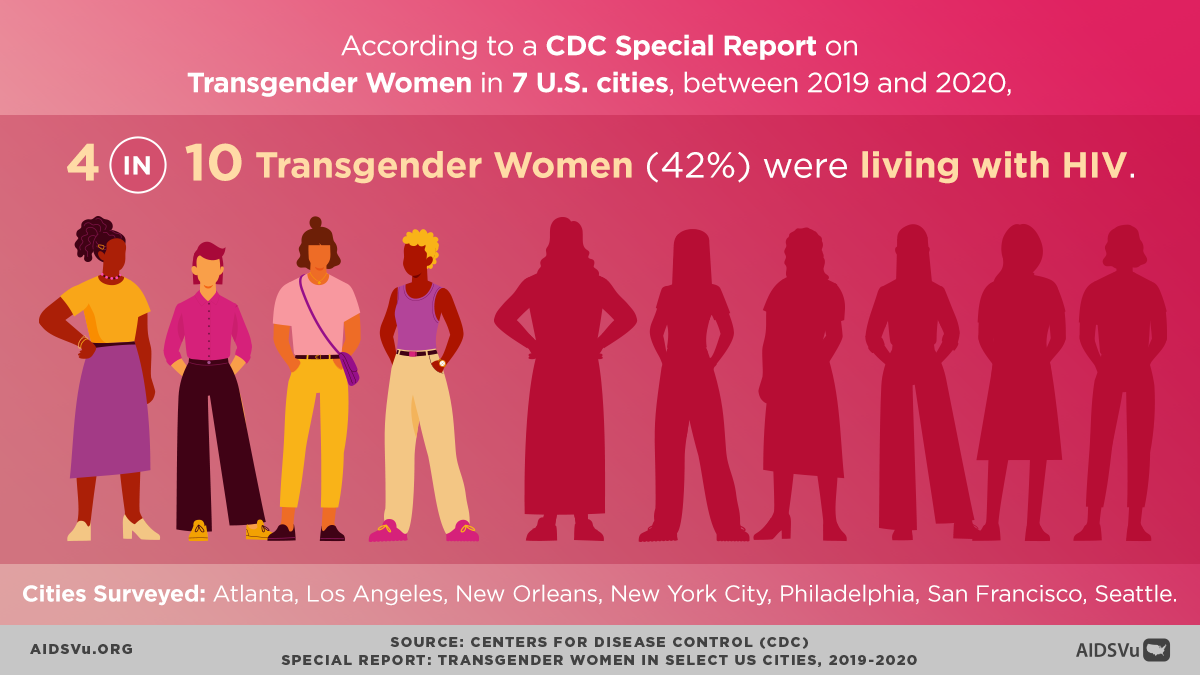
According to a 2021 CDC Special Report that analyzed HIV among transgender women in seven U.S. cities, between 2019 and 2020, high percentages of transgender women report a knowledge of PrEP, but far fewer report using PrEP.
The Special Report found the following when comparing PrEP knowledge compared to PrEP use among transgender women:
Atlanta: knowledge 92% (use 23%)
Los Angeles: 92% (27%)
New Orleans: 92% (36%)
New York City: 92% (43%)
Philadelphia: 96% (34%)
San Francisco: 95% (46%)
Seattle: 82% (17%)
Transgender men and women face many challenges which impact their ability to seek, receive, and remain engaged in HIV care. In addition, there are many prevention challenges that impact the HIV health outcomes for some transgender people. These include racism/discrimination, stigma, transphobic discrimination, medical mistrust, unmet gender affirmation needs, and many more.
In addition to these challenges, the social determinants of health that can impact all individuals living with or at risk for HIV may be particularly acute. According to data from the Ryan White HIV/AIDS Program, which may not be representative of the entire U.S.
In 2022, 73% of transgender women and 64% of transgender men living with HIV lived below the federal poverty level.
In 2021, 27% of transgender individuals living with HIV were homeless or experienced unstable housing.
Black Women and HIV
Black women continue to be disproportionately impacted by HIV, accounting for more than half of new HIV diagnoses among women in the United States despite making up a much smaller share of the U.S. female population. Among Black women, most new HIV diagnoses are attributed to heterosexual contact, and the HIV diagnosis rate among Black women remains higher than among women of other races and ethnicities.
Black transgender women are also disproportionately impacted by HIV. A CDC study of transgender women in seven major U.S. cities found that Black transgender women accounted for 62% of HIV infections among transgender women with HIV in those cities.
Black women are also underserved by HIV prevention methods such as PrEP relative to their need. Among all PrEP users in the U.S. in 2025, 90% were men and only 10% were women, even though women accounted for 20% of new HIV diagnoses in 2024. Men had a PrEP use rate nine times higher than women and a PrEP-to-Need Ratio more than twice as high, underscoring the need to expand PrEP awareness, access, and uptake among women, including Black women.