PrEP Use by Race/Ethnicity

Prep

PrEP by Race/Ethnicity

Based on the two documents, I’d update it to be more data-forward and clearer about what the 2025 PrEP data show:

Black Communities

Black communities in the United States continue to face significant structural and societal barriers to HIV prevention, including stigma and discrimination, systemic racism, medical mistrust, bias in healthcare settings, homophobia and transphobia, limited access to affordable health insurance, and socioeconomic challenges such as poverty, housing instability, and unemployment. These barriers contribute to persistent inequities in PrEP awareness, access, and uptake.

AIDSVu’s PrEP data help illustrate this unmet need through the PrEP-to-Need Ratio, or PnR, which compares the number of PrEP users to the number of people newly diagnosed with HIV. A lower PnR indicates greater unmet need for PrEP.

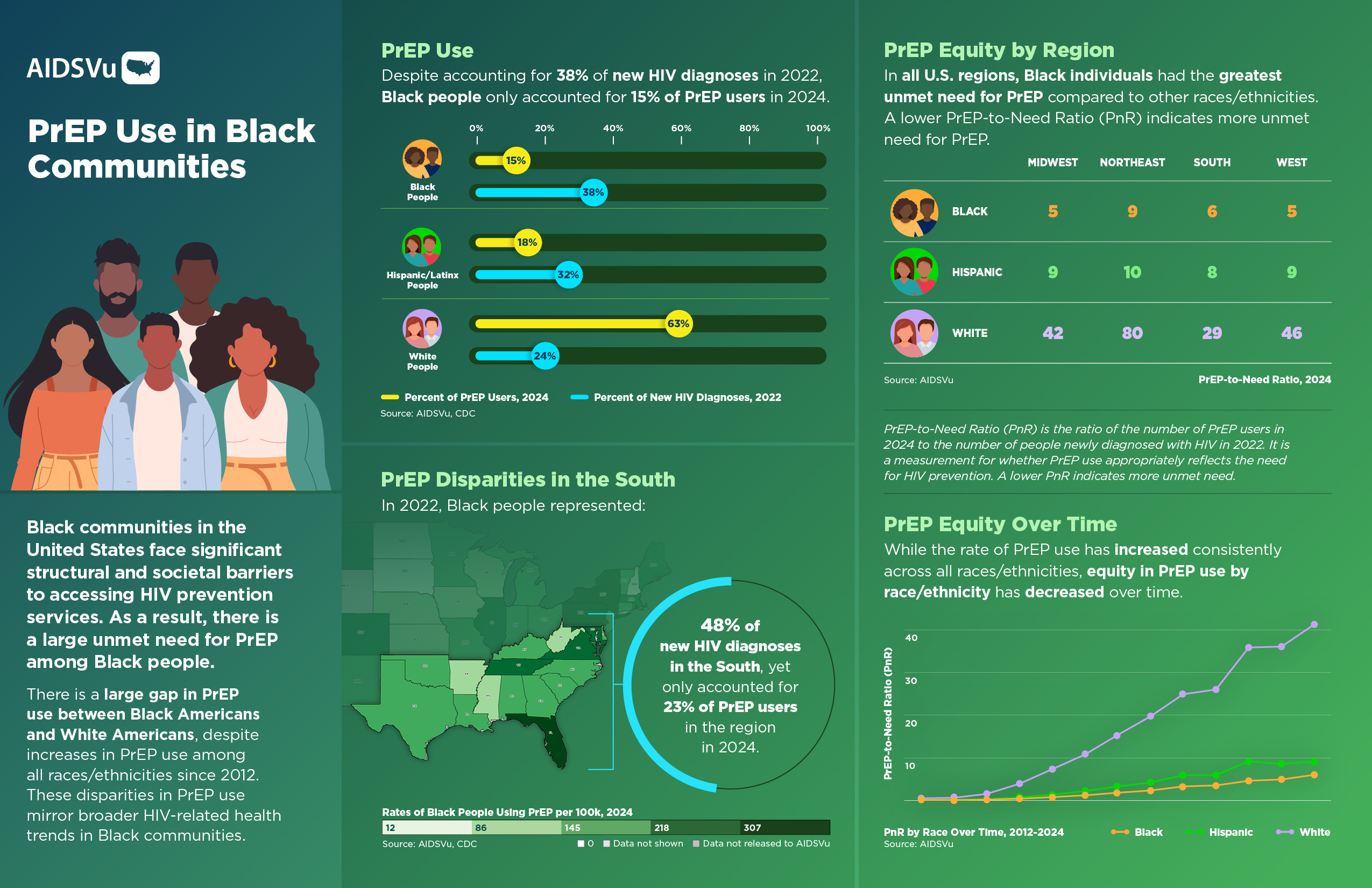
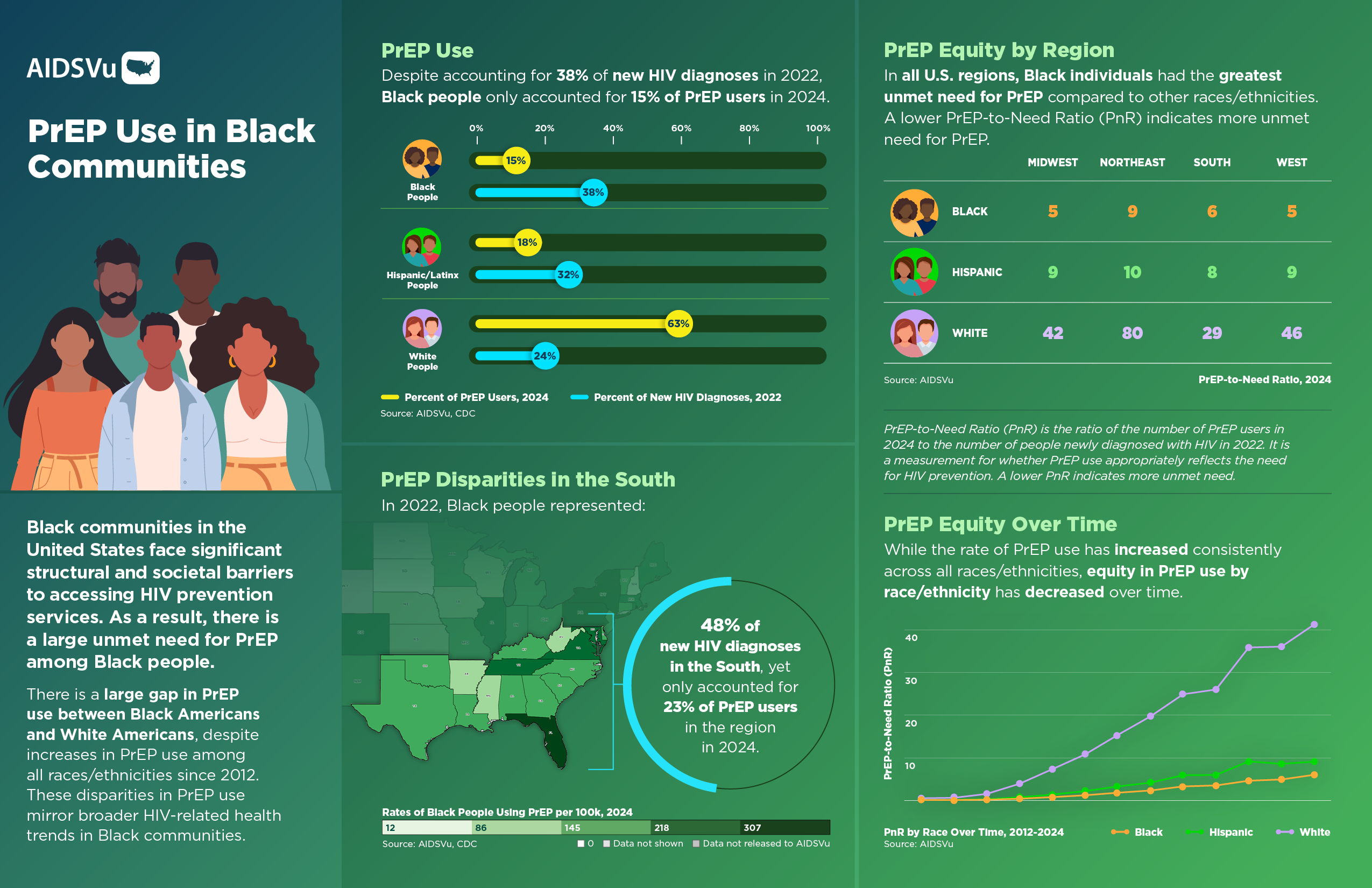
While PrEP use has increased across racial and ethnic groups since 2012, major disparities remain. In 2025, Black people had a PnR of 6.5, compared with 45.1 among white people, meaning the PnR for white people was nearly seven times higher than for Black people. Black people also represented 39% of all new HIV diagnoses in 2024 — the highest among all racial and ethnic groups — but accounted for only 15% of PrEP users in 2025.

These disparities mirror broader HIV-related health inequities in Black communities and underscore the continued need to expand PrEP awareness, access, and uptake in the communities most impacted by HIV.

  • Black people represented 39% of all new HIV diagnoses in 2024, the highest among all racial and ethnic groups, but accounted for only 15% of PrEP users in 2025. In comparison, white people represented 21% of new HIV diagnoses in 2024 but accounted for 62% of PrEP users in 2025.
  • These disparities are also reflected in PrEP equity. Nationally, there were 6.5 Black PrEP users for every new HIV diagnosis among Black people in 2025, compared with 45.1 white PrEP users for every new HIV diagnosis among white people.
  • Regional data show similar gaps. In the South, Black people represented 48% of new HIV diagnoses in 2024 but accounted for only 23% of PrEP users in the region in 2025. In the Midwest, Black people represented 41% of new HIV diagnoses in 2024 but accounted for only 13% of PrEP users in the region in 2025.

Hispanic/Latinx/Latine Communities

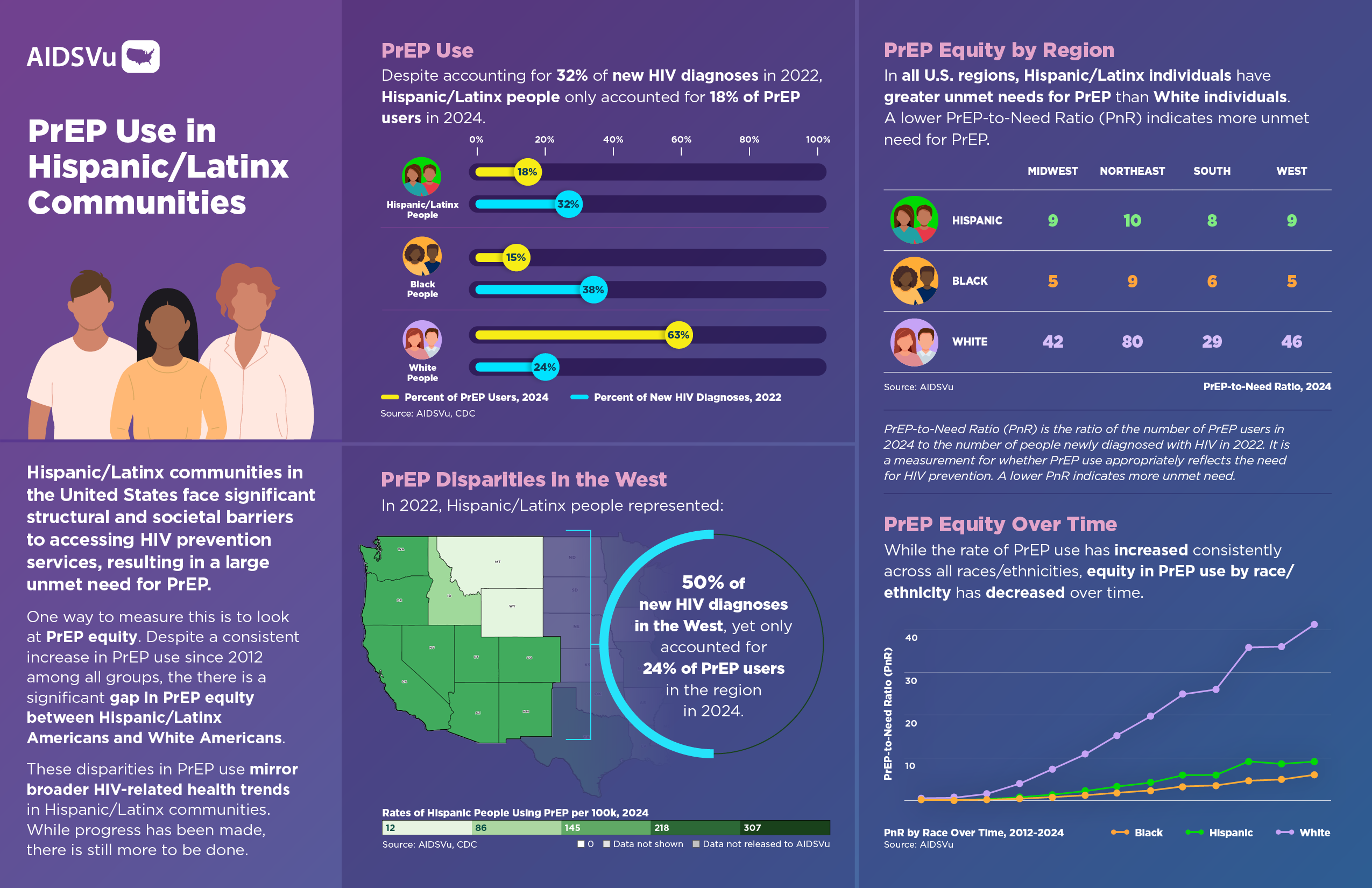
Hispanic/Latinx/Latine communities in the United States continue to face significant structural and societal barriers to HIV prevention, including language and cultural barriers in healthcare settings, limited access to affordable health insurance, medical mistrust, stigma and discrimination, homophobia and transphobia, and socioeconomic challenges such as poverty, housing instability, and unemployment. These barriers contribute to persistent inequities in PrEP awareness, access, and uptake.

AIDSVu’s PrEP data help illustrate this unmet need through the PrEP-to-Need Ratio, or PnR, which compares the number of PrEP users to the number of people newly diagnosed with HIV. A lower PnR indicates greater unmet need for PrEP.

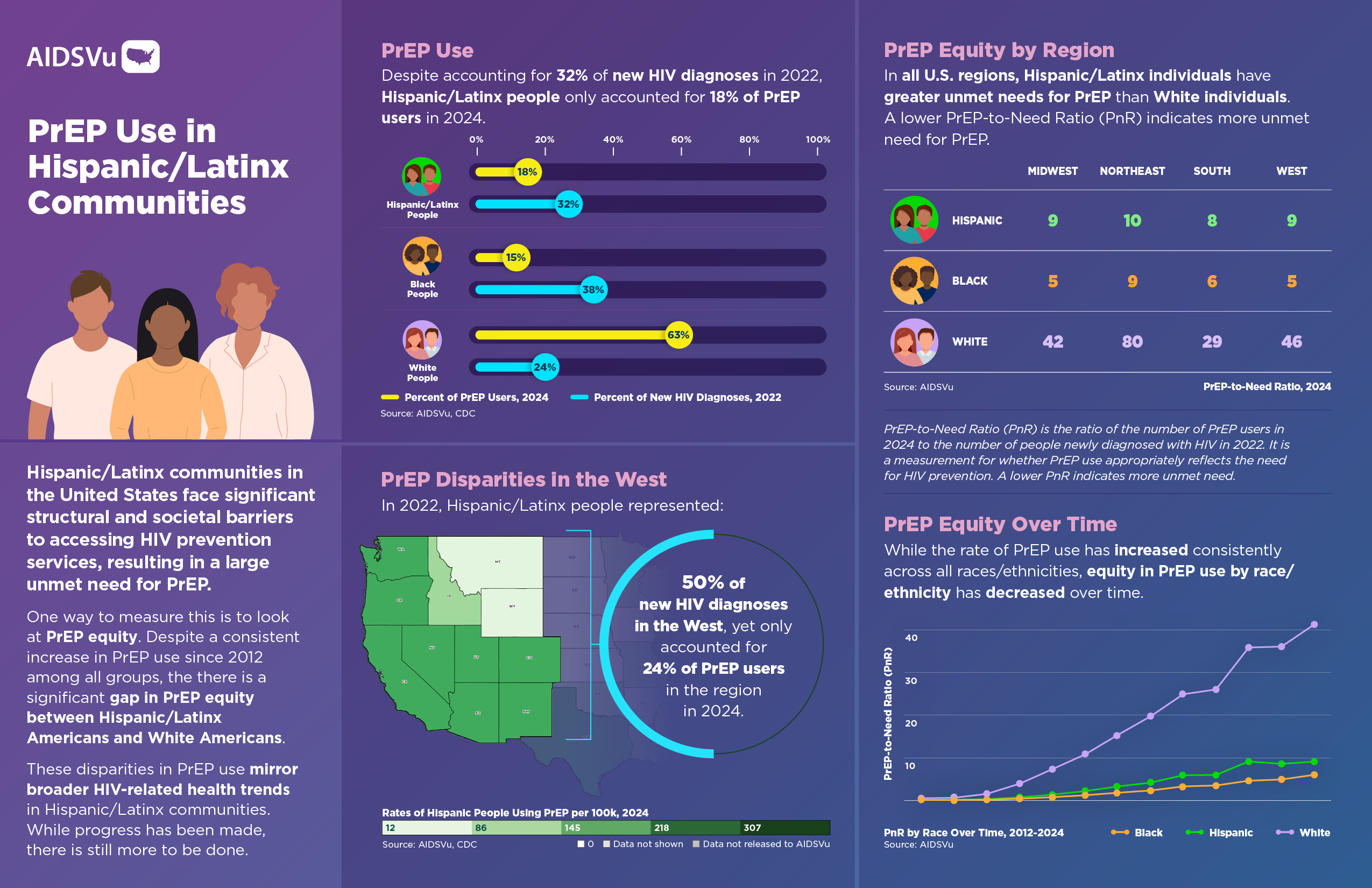
While PrEP use has increased across racial and ethnic groups since 2012, major disparities remain. In 2025, Hispanic/Latinx/Latine people had a PnR of 8.6, compared with 45.1 among white people, meaning the PnR for white people was more than five times higher than for Hispanic/Latinx/Latine people.

Hispanic/Latinx/Latine people represented 34% of new HIV diagnoses in 2024 but accounted for only 18% of PrEP users in 2025. In comparison, white people represented 21% of new HIV diagnoses in 2024 but accounted for 62% of PrEP users in 2025.

These disparities are especially clear in the West, where Hispanic/Latinx/Latine people represented 51% of new HIV diagnoses in 2024 but accounted for only 25% of PrEP users in the region in 2025. Across every U.S. region, Hispanic/Latinx/Latine people had a lower PnR than white people, underscoring the continued need to expand PrEP awareness, access, and uptake in Hispanic/Latinx/Latine communities.